
A rinse may remove white marks from concrete, but it won’t necessarily stop them returning. If you’re searching for “cleaning efflorescence from concrete perth,” start by identifying the deposit and considering how moisture might be carrying salts to the surface. Repeated scrubbing or aggressive pressure can affect the finish without addressing what is causing the marks.
Efflorescence is often confused with other stains, so a quick visual check can help you choose a sensible next step. This guide explains the clues to look for, how to clean cautiously, and when recurring or widespread deposits may call for specialist treatment. It also covers practical checks for dampness, drainage and water pooling around concrete in Perth.
A measured approach can help you protect the surface while deciding whether a cautious DIY clean or professional concrete restoration is more suitable.
Key Takeaways
- Learn how efflorescence may look different from other concrete surface issues.
- Choose a cleaning method suited to the concrete finish rather than relying on a one-size-fits-all cleaner.
- Compare when a small, isolated deposit may suit cautious DIY cleaning and when recurring or widespread marks warrant specialist treatment.
- Check drainage, persistent dampness and water pooling for conditions that may contribute to recurring deposits.
- See how Sealwerx’s efflorescence treatment and concrete restoration can help care for residential and commercial surfaces across Perth.
What Is Concrete Efflorescence, and Why Does It Appear in Perth?
A white deposit on a driveway, path or garage floor may look like a cleaning problem, but it can point to moisture moving through the concrete. Efflorescence is the pale salt residue left when water carrying soluble salts reaches the surface and evaporates. The salts remain as a powdery film or small crystals. The deposit is a surface symptom, not a diagnosis of the moisture source.
Removing the visible residue may not prevent it from returning. If moisture continues to move through the concrete, it can carry more dissolved salts to the surface. Effective cleaning efflorescence from concrete Perth properties starts with identifying the marks and considering the surrounding surface conditions, rather than treating every white patch as the same stain.
How moisture brings salts to the concrete surface
Concrete has pores that allow moisture to move through it. Water may dissolve soluble salts in the concrete or nearby materials, then carry them towards an exposed surface. As the water evaporates, the salts can crystallise and become visible. The overview of what efflorescence is describes this general process, but the deposit alone can’t reveal where the moisture began.
How to recognise efflorescence on concrete
Efflorescence often appears as a pale, dry-looking powder or crystalline crust. It may form in patches, along edges or around joints, depending on the surface and how moisture moves through it. A deposit that brushes away may be consistent with loose salts, but that clue isn’t conclusive. Don’t assume every white mark has the same cause.
Other deposits can look similar. Paint residue may resemble a coating or flakes, mineral staining may be more firmly attached, and biological growth may look textured or spread across the surface. These are visual clues only. Colours and textures can overlap, and more than one type of mark may be present.
Inspect the area in good light. Note whether the deposit is loose, crystalline, crusted or firmly attached. If the surface appears suitable, test only a discreet spot with a gentle, dry touch. Stop if the finish seems vulnerable or the deposit doesn’t respond as expected. Strong cleaners and forceful scrubbing aren’t useful diagnostic tests: they may alter the finish and make the mark harder to identify.
Look at the surrounding concrete too. Is the deposit isolated, or does it return in the same place? Are there nearby damp patches or signs of water collecting? These observations can help describe the problem, but they don’t prove its source. If the mark could be paint, mineral staining, biological growth or a broader finish issue, specialist assessment can help identify the surface concern before treatment.
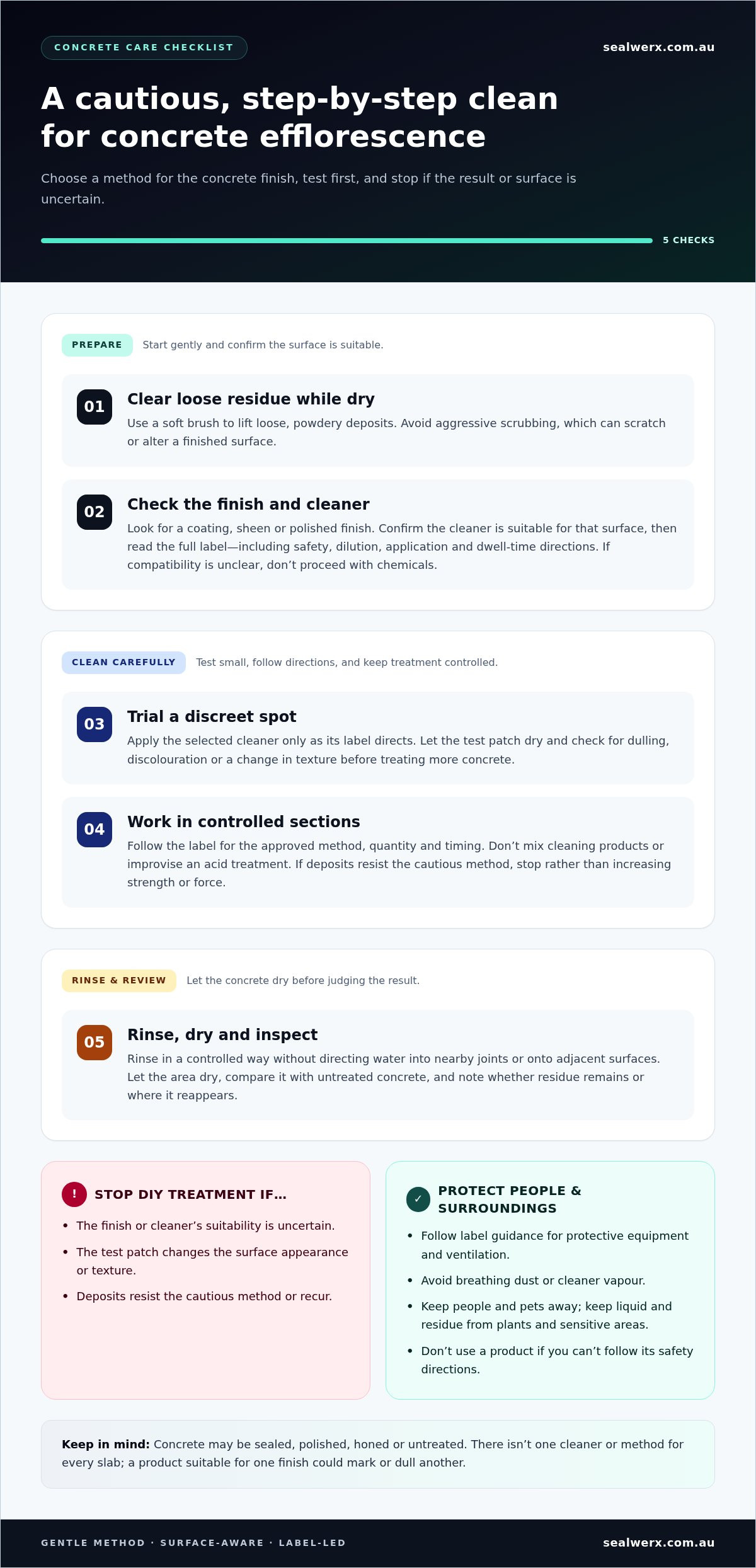
How to Clean Efflorescence from Concrete: A Cautious Step-by-Step Method
A careful approach to cleaning efflorescence from concrete in Perth helps reduce the risk of changing the surface finish while removing loose deposits. There isn’t one cleaner or method for every slab. Concrete may be sealed, polished, honed or untreated, and a product suitable for one finish could mark or dull another. If the deposit covers a large area, the finish is sensitive or the mark is unclear, pause before applying a cleaner.
Prepare the concrete and choose a suitable method
Start with a dry, gentle check and remove only loose residue. Identify the concrete finish as far as possible, then confirm that the cleaner is intended for that surface. Read the full label, including safety precautions and directions for dilution, application and dwell time. Don’t guess or assume a product suitable for bare concrete is safe on a sealed or polished finish.
Clean, rinse and inspect the treated area
Work on a small area first. A discreet test can reveal an unwanted change before you treat more of the surface. Follow the product label, rinse in a controlled way and let the concrete dry before assessing the result. Keep runoff away from adjacent materials, joints and sensitive areas. Note where any deposits return.
- Clear the surface dry. Use a soft brush to lift loose, powdery deposits without grinding them into the concrete. Avoid aggressive scrubbing, which can scratch or alter a finished surface.
- Check the finish and cleaner. Look for a coating, sheen or polished finish, then check the cleaner’s compatibility and label directions. If the finish or product suitability is unclear, don’t proceed with chemicals.
- Trial a discreet spot. Apply the selected cleaner only as directed on its label. Check the dried test patch for dulling, discolouration or a change in texture before treating more of the surface.
- Clean in controlled sections. Follow the approved method and label directions for quantity and timing. Don’t mix cleaning products or improvise an acid treatment. If deposits resist the cautious method, stop rather than increasing the strength or force.
- Rinse, dry and review. Rinse without directing water into nearby joints or onto adjacent surfaces. Let the area dry, then compare it with the untreated concrete. Note whether residue remains and where it reappears.
Protect yourself and the surrounding area. Follow the product label’s guidance on personal protective equipment and ventilation, and avoid breathing dust or cleaner vapour. Keep people and pets away during treatment, and prevent cleaning liquid or residue from reaching plants and other sensitive areas. Don’t use a product if you can’t follow its safety directions.
Stop DIY treatment if deposits recur, the finish is uncertain or the concrete’s appearance changes. A specialist assessment can consider both the residue and the condition of the finish. Sealwerx provides efflorescence treatment and concrete restoration services.
DIY Cleaning or Professional Efflorescence Treatment: Which Fits the Job?
Not every white deposit needs specialist treatment. A small, isolated patch on accessible concrete may suit a cautious DIY attempt. Recurring marks or a delicate finish make the decision less straightforward. Consider the size of the affected area, how quickly deposits return, the concrete’s finish and whether you can reach the spot safely.
Cleaning removes visible residue, but it may not resolve the moisture pathway carrying salts to the surface. A clean-looking result doesn’t prove the cause has been addressed, and no cleaning method can promise permanent removal in every situation.
| Consideration | DIY may suit | Specialist assessment may help |
|---|---|---|
| Surface area | A small, isolated patch that’s easy to reach and treat carefully. | Deposits spread across a large area or appearing in several locations. |
| Recurrence | A first, light deposit that responds to a cautious method. | Marks that return quickly or repeatedly after cleaning. |
| Finish sensitivity | A known, untreated concrete surface with a compatible cleaner. | A sealed, polished or honed finish, or a surface whose treatment is uncertain. |
| Access and identification | An accessible area where the deposit is reasonably clear and a small test is practical. | A hard-to-reach location or marks that could be staining, residue or another finish concern. |
When careful DIY cleaning may be a reasonable first step
DIY cleaning can be a reasonable starting point for a limited deposit on a known concrete surface. Test a discreet patch and use only a cleaner whose label confirms it’s suitable for that finish. Follow the instructions rather than estimating dilution or contact time. Stop if the test changes the appearance, the deposit proves difficult to remove or the marks return soon after cleaning.
When specialist assessment can add value
Consider an assessment when deposits cover a broad area, keep returning, are difficult to identify or sit on concrete with a sensitive or unknown finish. A specialist can assess the surface, deposits and nearby signs of moisture together. This helps distinguish residue from broader finish concerns and inform a suitable treatment, without assuming the visible salts reveal the precise moisture source.
For property owners considering cleaning efflorescence from concrete Perth, the decision isn’t simply about scrubbing the surface. It’s about matching the treatment to the concrete and recognising when the pattern needs a closer look. Sealwerx offers efflorescence treatment alongside concrete honing, polishing and sealing, which can be useful when cleaning needs to be considered in light of the existing finish. This approach supports surface care without suggesting every deposit needs professional work or that treatment will prevent all recurrence.
How to Reduce Recurring Efflorescence on Perth Concrete
To reduce recurrence, first look at what may be keeping the concrete damp. Applying a sealer after cleaning isn’t a universal fix for moisture movement and won’t identify or correct its source. Check the surrounding area, track where deposits return and assess the concrete’s condition before choosing further treatment.
Check for conditions that keep concrete damp
Inspect the affected area and its surroundings for recurring wet patches, pooled water or drainage that directs water towards the concrete. Check where downpipes discharge and whether irrigation repeatedly wets the same spot. These observations are useful, but they don’t prove the cause. Note where and when new deposits appear to see whether a pattern develops.
If the concrete stays damp or deposits keep returning in the same area, investigate the moisture rather than relying on repeated surface cleaning. The residue alone can’t establish whether water comes from a nearby source, moves through the slab or reaches the surface another way. An assessment can help interpret the surface and surrounding signs together.
- Check whether water collects beside the concrete after rain or routine washing.
- Look for drainage outlets or irrigation that leave the same area repeatedly damp.
- Record where marks return and whether nearby areas show similar changes.
Consider sealing only after assessing the concrete
Assess the finish and its condition before sealing. Surface preparation, existing coatings and moisture-related concerns can affect whether sealing is suitable and how the concrete should be treated. Applying a sealer without considering these factors may not address recurring deposits. No sealer should be treated as a guarantee against efflorescence.
Concrete finishes vary, so restoration and protection should suit the surface. The Surface Sealing Perth guide offers broader protection context, while Polished Concrete Floors Perth explains how finish type relates to care. Persistent dampness still needs separate attention; sealing alone shouldn’t be assumed to resolve it.
Keep a simple record to help guide your next decision. Photograph deposits before cleaning, note nearby water collection and compare the same locations after the concrete dries. This can help distinguish a one-off mark from a pattern that warrants closer attention. For cleaning efflorescence from concrete Perth, consider both the visible deposit and the surface condition before choosing a response.
If deposits recur or you’re unsure whether sealing suits the finish, arrange an assessment of your concrete with Sealwerx. Its efflorescence treatment and concrete restoration services can help assess the affected surface and guide a suitable approach.
Professional Efflorescence Cleaning in Perth by Sealwerx
Recurring or extensive white deposits can be frustrating, especially when cleaning improves the appearance only for the marks to return. A useful next step is to assess the concrete and its surroundings together. The location of the deposits, how they change over time, the finish beneath them and nearby signs of moisture can all inform treatment. No single surface clue confirms the exact moisture source, so assessment should avoid assuming more than the evidence shows.
Sealwerx is an Osborne Park-based surface restoration and protection business serving residential and commercial clients across Perth. It provides efflorescence treatment and concrete restoration tailored to the surface and project, helping property owners make an informed decision about caring for their concrete.
What a surface-focused assessment should consider
A useful assessment looks beyond the most visible patch. It considers whether deposits are isolated or widespread, whether they have returned after cleaning, and whether they cluster around edges, joints or other parts of the surface. The concrete finish matters too: sealed, polished, honed and untreated concrete can respond differently to cleaning and restoration.
Reviewing these details together helps distinguish removable deposits from staining or a broader finish concern. The aim is to select treatment suited to the concrete’s condition, rather than apply a standard method to every surface. Recommendations should reflect the affected area and its condition, not assume a result before the surface has been assessed.
From cleaning to concrete restoration
For light, isolated deposits, a suitable cleaning method may be enough. Recurring marks, a large affected area or a dull or uneven-looking finish may call for efflorescence treatment alongside broader concrete restoration. The right scope depends on the surface. Cleaning, honing, polishing or sealing may suit different situations, but these options aren’t interchangeable and should be chosen with the existing finish in mind.
Sealwerx assesses visible deposits and surrounding surface conditions, then tailors efflorescence treatment and concrete services to the project. This can be useful when repeated cleaning hasn’t resolved the concern or when it’s unclear whether the white marks are affecting the finish or sitting on top of it. The focus is a careful approach suited to the concrete, without promising treatment will prevent every recurrence.
If deposits are recurring or extensive, discuss concrete efflorescence treatment with Sealwerx to explore an approach suited to your Perth surface.
Choose a Clear Next Step for Your Concrete
Before treating the same white marks again, consider what you need to learn from the next step. Take a clear photo of the affected area and note where deposits return. These details can make a discussion about the surface more useful. If you’re unsure whether another DIY attempt is appropriate, don’t risk the finish just to find out.
Careful cleaning efflorescence from concrete Perth means choosing a response that suits the surface, not simply aiming for a quick visual change. If deposits keep returning or cover a substantial area, professional guidance can help you understand treatment options before further cleaning or restoration.
For a practical discussion about your concrete, discuss professional concrete efflorescence treatment with Sealwerx.
Frequently Asked Questions
Can efflorescence be removed permanently from concrete?
Not always. Cleaning the visible deposit doesn’t necessarily stop it returning. If moisture continues to reach the concrete, new salts may appear after another wetting and drying cycle. Note whether marks return in the same spot, follow an edge or spread elsewhere. That pattern can help guide further investigation. Treatment can address the surface, but lasting results depend on the conditions affecting it.
Does vinegar remove efflorescence from concrete?
Vinegar isn’t a universally suitable treatment for concrete efflorescence. Its acidity may affect some surfaces or finishes, and a DIY mixture can’t be assumed safe for sealed, polished or otherwise treated concrete. Even if a patch appears lighter, that doesn’t confirm the deposit’s cause or resolve moisture conditions. Use a cleaner only if its label confirms compatibility with the specific surface, and test discreetly before broader use.
Is efflorescence on concrete harmful?
Efflorescence is often mainly an appearance concern, but recurring deposits can indicate ongoing moisture movement that deserves attention. In some situations, salt crystallisation within porous material may contribute to surface deterioration over time. The white residue alone doesn’t establish whether damage is occurring or identify its source. If you notice flaking, pitting or other changes in the concrete alongside recurring deposits, arrange an assessment rather than treating the marks as purely cosmetic.
Can a pressure washer damage concrete when removing efflorescence?
Yes. Forceful or poorly controlled pressure washing can wear the surface, expose aggregate, disturb a coating or affect a honed or polished finish. It may also push water into joints or adjacent areas. Don’t assume a driveway can tolerate the same approach as unfinished concrete. If you can’t identify the finish or control the impact safely, avoid pressure washing and choose a method suited to the surface.
Why does efflorescence appear after rain?
Rain can add moisture around or within concrete, allowing soluble salts to move towards an exposed area as the surface dries. But deposits appearing after rain don’t prove that rain is the only moisture source. Water may collect beside the slab or reach it from nearby drainage or irrigation. Note where marks form after wet weather and compare those spots with areas that remain dry.
How can I tell efflorescence from mould on concrete?
Efflorescence often looks like dry, pale powder or crystals, while mould may appear irregular, textured or discoloured and can be associated with persistent dampness. These clues aren’t definitive: lighting, surface texture and other residues can make marks hard to distinguish. Avoid inhaling loose material or applying chemicals just to test it. If the patch is unclear, an assessment can help identify the surface concern before treatment.
Can efflorescence appear on newly poured concrete?
Yes. Deposits can appear on new concrete as moisture moves through the material and evaporates, leaving salts at the surface. Their presence alone doesn’t prove the concrete was installed incorrectly. Note whether the marks change as the surface dries and whether they return or spread. If deposits persist or the finish changes too, seek advice before applying a cleaner or sealer, particularly while assessing the concrete’s condition.