
Replacing damaged-looking tiles may be the wrong first move. In the tile replacement vs restoration Perth decision, the key question is whether the tiles or grout have deteriorated, or whether a deeper installation, substrate or moisture problem is showing through. A cosmetic issue can raise concerns about costly damage, while replacement may create more disruption and waste than the surface actually needs.
This guide will help you assess the signs and choose a proportionate path. Sound tiles with stained grout, surface dullness or worn grout may respond to restoration, including tile and grout cleaning, colour sealing, re-grouting or specialist natural-stone care. Cracked, loose or lifting tiles can point to issues that surface work alone won’t correct, making replacement more appropriate. We’ll compare what each option involves, where restoration has limits, and how to protect your Perth property with a solution suited to the surface’s condition.
Key Takeaways
- Separate surface wear from signs of a deeper fault before deciding on the scope of work.
- Check tile faces, grout, movement and moisture patterns to build a clearer picture of the damage.
- Use the tile replacement vs restoration perth comparison to weigh the work involved, disruption and limits of each option.
- Record the tile material and map where cracks or other symptoms appear, especially if they return.
- Learn how Sealwerx’s Perth restoration services can help maintain suitable existing tile, grout and natural-stone surfaces.
Tile Replacement vs Restoration in Perth: What Problem Are You Solving?
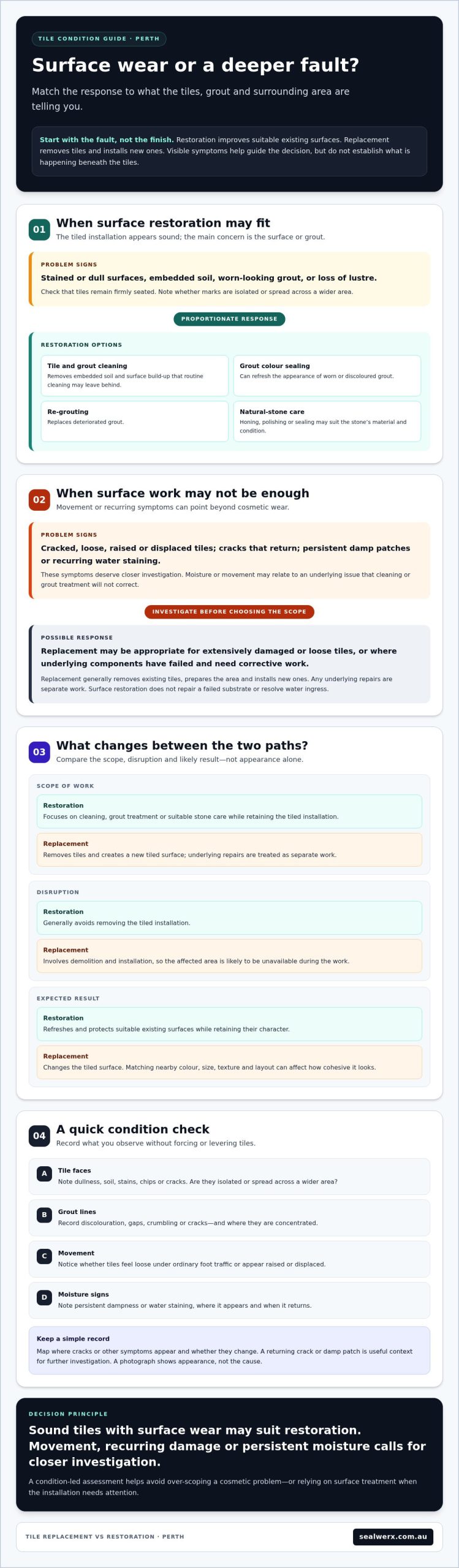
Start with the fault, not the finish you’d like to see. Restoration improves existing tile, grout or stone surfaces while retaining the tiled installation. It can address embedded soil, surface build-up, discoloured grout or a tired stone finish. Replacement is a broader renovation process that removes tiles and installs new ones. The tile replacement vs restoration perth decision depends on the material, the pattern of damage and whether the underlying installation is sound.
Tiles are made from different materials and used across floors and walls, so the right treatment depends on what’s already in place. The general Tile overview provides background on tile types and uses, but visible symptoms still need to be considered in context.
What does tile restoration include?
Professional tile and grout cleaning removes embedded soil and surface build-up that routine cleaning may leave behind. If grout is worn or discoloured, grout colour sealing can refresh its appearance, while re-grouting replaces deteriorated grout. Natural stone may benefit from honing, polishing or sealing, but the treatment needs to suit its material and condition. These methods improve the surface; they don’t repair a failed substrate or resolve water ingress.
What does tile replacement involve?
Replacement generally involves removing existing tiles, preparing the area and installing new ones, making it a larger renovation scope than surface treatment. The finished appearance can depend on whether new tiles can match the existing colour, size, texture and layout. Replacement may be appropriate when tiles are extensively damaged or loose, or when underlying components have failed and need corrective work rather than a cosmetic refresh.
Use this comparison to frame the decision. It describes typical differences, not a diagnosis of a particular floor or wall.
- Condition: Restoration may suit sound tiles with dirty surfaces, dullness or worn grout. Replacement may suit tiles that are cracked, loose or displaced, particularly when the problem recurs.
- Likely scope: Restoration focuses on cleaning, grout treatment or suitable stone care. Replacement removes tiles and creates a new tiled surface, with any underlying repairs treated as separate work.
- Disruption: Surface restoration generally avoids removing the tiled installation. Replacement involves demolition and installation, so the affected area is likely to be unavailable during the work.
- Expected result: Restoration refreshes and protects suitable existing surfaces while retaining their character. Replacement changes the tiled surface, although matching nearby tiles and layout can affect how cohesive the final result looks.
A single stained grout line is different from a group of loose tiles or cracks that keep returning. Record where symptoms appear and whether they change. Moisture, movement or repeated cracking can point to an underlying issue that surface treatment won’t correct. A condition-led assessment helps avoid over-scoping a cosmetic problem or relying on restoration when the installation itself needs attention.
How to Assess Tile and Grout Condition in a Perth Property
A useful inspection starts by separating what you can see from what you can’t yet explain. Surface staining and worn-looking grout may be suitable for restoration, while movement, recurring cracks or persistent dampness deserve closer investigation. This visual check can help you describe the condition clearly, but it can’t establish what’s happening beneath the tiles. A photograph captures appearance, not the cause.
Work through a visual check
- Look across the tile faces. Note dullness, surface soil, stains, chips or cracks. Check whether marks are isolated or spread across a wider area. A dull finish on otherwise intact natural stone may call for a different treatment from a chip in a ceramic tile.
- Follow the grout lines. Record discolouration, gaps, crumbling sections or cracks. Note where grout looks worn and whether the condition is consistent or concentrated around a particular tile, corner or wet area.
- Check for movement. Without forcing or levering tiles, notice whether any feel loose under ordinary foot traffic or appear raised or displaced. Movement is different from a surface blemish and may indicate an issue that cleaning or grout treatment won’t resolve.
- Note moisture signs. Record persistent damp patches, water staining or signs that reappear after the area dries. Note their location and when you see them, but don’t treat a visible mark as proof of a specific leak or waterproofing fault.
Keep a simple record of locations and patterns. If a crack returns after repair, or dampness keeps showing in the same place, that history is useful context for further investigation. The Western Australia Guide to Standards and Tolerances offers a reference for workmanship expectations in residential construction, but it isn’t a substitute for assessing the cause of a particular symptom.
Which signs suggest restoration may be suitable?
Restoration may be appropriate when tiles remain firmly seated and the main concern is surface soil, staining or loss of lustre. Grout that looks tired or discoloured may respond to professional cleaning, colour sealing or re-grouting, depending on its condition. Treat natural stone separately: honing, polishing and sealing are material-sensitive processes, so the stone type, finish and damage all matter. The tile replacement vs restoration perth choice should follow the condition, not appearance alone.
Which signs point beyond surface restoration?
Loose or displaced tiles, cracks that repeatedly return, and persistent moisture call for investigation beyond appearance-focused treatment. These symptoms can have different causes, so one visible sign or photograph can’t confirm a substrate, adhesion or waterproofing failure. Restoration can improve suitable surfaces, but it can’t correct failed adhesion, movement or a defective waterproofing system. Sealing, polishing and grout work also shouldn’t be relied on to stop an active leak.
Once you’ve recorded what you observe, a condition-led assessment can help distinguish a finish that needs care from a problem requiring a different scope of work. Sealwerx provides tile and grout restoration for Perth properties, including cleaning, grout colour sealing and re-grouting.
Restoration vs Replacement in Perth: Compare Scope, Disruption and Results
The practical difference is scope. Restoration retains the existing tiles and treats suitable surface or grout issues. Replacement removes tiles and changes the tiled surface and installation. Neither is automatically cheaper or more durable: the right comparison depends on the extent of damage, the material, the cause and any work needed underneath.
Use this guide to compare likely project impacts, not as a promise of a set timeframe or result. Room access, waste and downtime vary with the area, site conditions and work involved.
| Factor | Restoration | Replacement |
|---|---|---|
| Suitable conditions | Tiles are sound and firmly fixed, with surface wear, soil or grout concerns. | Widespread tile failure, recurring movement-related damage or a failed installation may make a broader renovation appropriate. |
| Work scope | May involve tile and grout cleaning, grout colour sealing, re-grouting or suitable stone treatment. | Typically involves removing existing tiles, preparing the area and installing a new tiled surface. Underlying repairs may add to the scope. |
| Disruption and waste | Retains serviceable tiles and avoids removing the tiled surface, though access may still be affected during treatment. | Removal creates waste and can affect access to the room while demolition and installation work takes place. |
| Result and limits | Refreshes suitable existing finishes but won’t correct failed adhesion, movement or waterproofing problems. | Changes the surface and can address failed components when the necessary underlying work is included. Matching surrounding tiles may be difficult. |
When is restoration the more proportionate option?
If tiles are sound and the issue is a dull finish, built-up soil or surface staining, targeted cleaning or suitable finish restoration may be more proportionate than removing the installation. Discoloured grout may respond to cleaning or colour sealing; deteriorated grout may call for re-grouting. Preserving serviceable material supports ongoing property maintenance, provided the work addresses the actual condition rather than masking a deeper fault.
Natural stone needs its own assessment. Honing, polishing or sealing must suit the stone and its existing finish. A treatment that improves one material may not be right for another, so condition-led restoration helps protect the surface without assuming every tile or stone can be treated alike.
When may replacement be the better pathway?
Replacement may be more suitable where tile failure is widespread, damage repeatedly returns with movement, or the installation itself has failed. A preference for a different colour or layout is a separate design decision, not evidence that the existing tiles are physically defective. Keep those reasons distinct when weighing scope and disruption. If moisture or waterproofing problems are suspected, they need to be investigated and resolved before selecting a new finish; surface restoration alone won’t fix them.
For tile replacement vs restoration perth, compare the work needed to leave the whole assembly sound, not just the visible finish. A measured scope can help avoid unnecessary removal while ensuring surface treatment isn’t mistaken for a repair to an underlying failure.
A Practical Perth Decision Checklist Before You Commit
Before settling on restoration or replacement, gather a clear record of what’s affected and what you want the finished surface to do. A concise checklist helps distinguish a defined surface-care job from a broader renovation, and gives a useful starting point for discussing scope across Perth homes and commercial properties.
What information helps define the right scope?
- Identify the material. Note whether the surface is ceramic, porcelain, natural stone or another material if you know. If you’re unsure, record its appearance and finish rather than guessing, because suitable cleaning and restoration methods can vary.
- Map the affected area. Mark which room, wall or floor is involved, and note whether the concern is limited to a few tiles or appears across a wider section. Describe what you can see, such as staining, dullness, chipped edges or worn grout.
- Record patterns and history. Note where cracks, movement or moisture signs occur and whether they return after maintenance or drying. This information helps identify patterns, but it doesn’t diagnose the cause.
- Set the desired result. Decide whether you want cleaner grout, a refreshed existing finish or a different tiled look. The last is a design change; it doesn’t by itself mean the current surface has failed.
- Consider how the room is used. Note who needs access and whether the area is a busy household walkway, a shower or part of a commercial space. Access needs and room use can shape a practical work scope and how disruption is managed.
How should the decision account for Perth property conditions?
Think about the specific property, not a general assumption about Perth buildings. A residential bathroom, a commercial entry and an outdoor tiled area have different uses and access needs. Note whether the area can be taken out of use and what finish you expect to retain or change. These details help frame the work without assuming a cause from a single visible symptom.
If cleaning is the main concern, the Perth tile and grout cleaning guide explains the cleaning-focused restoration process in more detail. Keep moisture, movement or recurring cracks clearly recorded as concerns requiring investigation beyond appearance treatment.
Use your notes to compare the scope that best fits the surface: targeted care for serviceable tiles, or a broader renovation if the installation or desired design calls for it. This measured approach to tile replacement vs restoration perth can help you avoid committing to work before the problem and the intended result are clearly understood.
For condition-led care of existing tile, grout and natural-stone surfaces, explore Sealwerx restoration options for Perth properties.
How Sealwerx Restores Existing Tile, Grout and Stone Surfaces
Sealwerx is an Osborne Park-based surface restoration and protection specialist serving residential and commercial properties across Perth metropolitan area. Since 2005, the business has focused on cleaning, sealing, honing and polishing surfaces including natural stone, terrazzo, tile and grout. The aim is to improve and protect existing surfaces where they’re suitable for restoration, while being clear about what surface treatment can and can’t address. That distinction matters when deciding whether restoration fits the condition of your tiles.
What happens during a restoration-led assessment?
The surface material, visible condition and finish you want guide the work. Tile and grout cleaning, grout colour sealing and re-grouting address different grout and surface conditions; natural stone may call for honing, polishing or sealing suited to its material and finish. If symptoms suggest movement, moisture ingress or another underlying fault, restoration isn’t a fix for that problem.
A considered process keeps the scope specific:
- Assess the surface. Review the tile or stone type, grout condition, visible wear and the areas affected. Your notes on recurring stains, cracks or moisture can add useful context without being treated as a diagnosis.
- Define suitable restoration work. Match the observed surface condition to the appropriate treatment, such as tile and grout cleaning for build-up, grout work for worn or discoloured joints, or specialist stone care where the material allows.
- Complete the agreed treatment. Carry out the selected restoration work with attention to the surface and its intended finish, rather than applying a one-size-fits-all approach.
- Explain ongoing care. Understand the care relevant to the restored surface so you can maintain its appearance and make informed decisions about future upkeep.
What is the next step for your Perth tiles?
Before choosing a scope, compare your observations against the condition checklist: identify the material, map affected areas, and record whether symptoms return. If the tiles are serviceable and the concern is surface or grout condition, tile replacement vs restoration perth may point towards specialist restoration as a proportionate way to maintain the existing finish. Persistent moisture, movement or recurring cracks still need investigation beyond surface treatment.
Natural stone calls for material-specific care. Sealwerx provides honing, polishing and sealing, with further guidance in its Perth stone restoration guide. For protective treatment across suitable surfaces, the Perth surface sealing guide explains the role of sealing in ongoing maintenance. The right approach depends on the surface and the result you want, not simply on whether a finish looks tired.
If your notes point to serviceable tiles or stone that need specialist care, discuss your Perth surface restoration project with Sealwerx.
Make Your Next Surface Decision with Confidence
Your next step is to turn your observations into a clear brief: what finish you want, which areas matter most, and whether any symptoms need investigation before surface work begins. That gives you a practical basis for deciding how to protect the property without committing to a scope that doesn’t fit the condition.
The right tile replacement vs restoration perth choice should serve both the surface and the way you use the space. If the tiles are serviceable, specialist care may help preserve them. Sealwerx provides tile, grout and natural-stone restoration across Perth, including cleaning, sealing, honing and polishing where suited to the surface.
Discuss your Perth surface restoration project and take the next step towards a well-considered finish.
Frequently Asked Questions
Can tiles be restored without removing them?
Yes, suitable tiles can often be cleaned or treated in place. For example, a sound kitchen floor with soil in the grout may benefit from professional cleaning, while discoloured joints could need colour sealing or re-grouting. The tile replacement vs restoration perth decision depends on whether the existing surface can be improved without addressing a deeper fault. Restoration won’t secure loose tiles or correct a failed installation.
How can I tell whether my tile is ceramic, porcelain or natural stone?
Appearance alone may not identify a tile reliably, especially if it has a glazed finish or stone-like pattern. Check for leftover packaging, renovation records or product details, and note any visible variation between tiles. Avoid scratching or applying chemicals as a home test, since these can mark the finish. If the material remains uncertain, a surface assessment can help determine which cleaning or restoration methods are appropriate.
Does tile restoration fix a leaking shower or waterproofing problem?
No. Cleaning, sealing or re-grouting can improve suitable surfaces, but these treatments don’t repair a failed waterproofing system or stop an active leak. If water appears outside the shower, dampness persists, or staining returns, record where and when it occurs and arrange investigation of the underlying issue. Treating the visible grout or tile alone may improve appearance without resolving the source of moisture.
What happens if my tiles sound hollow when tapped?
A hollow sound can be a reason to look more closely, but it doesn’t prove on its own that a tile has detached. Sound can vary across a tiled area, and tapping can’t reveal the full condition beneath the surface. Note where the sound occurs and whether those tiles also move, crack or sit unevenly. If other symptoms are present, have the installation assessed before choosing surface restoration.
Will tile restoration change the colour or finish of my tiles?
It depends on the treatment and material. Cleaning is intended to remove soil rather than recolour the tile, while grout colour sealing changes the appearance of grout lines. Honing or polishing can alter the finish of suitable natural stone. Before work begins, be clear about the result you want and discuss how the selected treatment may affect the surface, grout colour and overall appearance.
Can outdoor tiles in Perth be restored?
Outdoor tiles may be suitable for restoration if their material and condition allow it. Dirt, staining or deteriorated grout may be treatable, but loose tiles, recurring cracks or persistent moisture need closer investigation first. Also consider how the area is used and whether traction is a concern, particularly around exposed entertaining areas. The surface and its current condition should guide the treatment, not its outdoor location alone.