
The cost to seal pavers in Perth depends on the paved area, paver material and preparation required. Cleaning, stain treatment and the condition of the joints can all affect the work involved. Sealwerx provides a quote based on the specific surface and its needs.Resealing is part of maintaining pavers, not just a finishing touch. In Perth, pavers generally need resealing every 3-5 years, with wear and exposure affecting the timing. A clean, fully dry surface helps the sealer adhere and protect the pavers.This article explains the factors that shape the cost, why cleaning and drying matter, and how sealing can help protect paving from stains, moisture and wear. It also covers what to consider when maintaining a patio, driveway or pool surround.
Key Takeaways
Compare paving area, material and preparation needs to understand what shapes a sealing quote.
Clean pavers carefully and allow them to dry fully before sealer application to support proper adhesion.
Choose a sealer finish with the surface and desired appearance in mind, while considering protection from stains and moisture.
When natural stone needs care as well as protection, stone honing, polishing and sealing can address different surface needs.
Table of Contents
Cleaning and drying before sealer application
Is it required to clean pavers before sealing them?
Protection from stains, oil, moisture, mould and weeds
Reasons to seal pavers in Perth
Sealwerx: Natural Stone Polishing
Cleaning and drying before sealer application
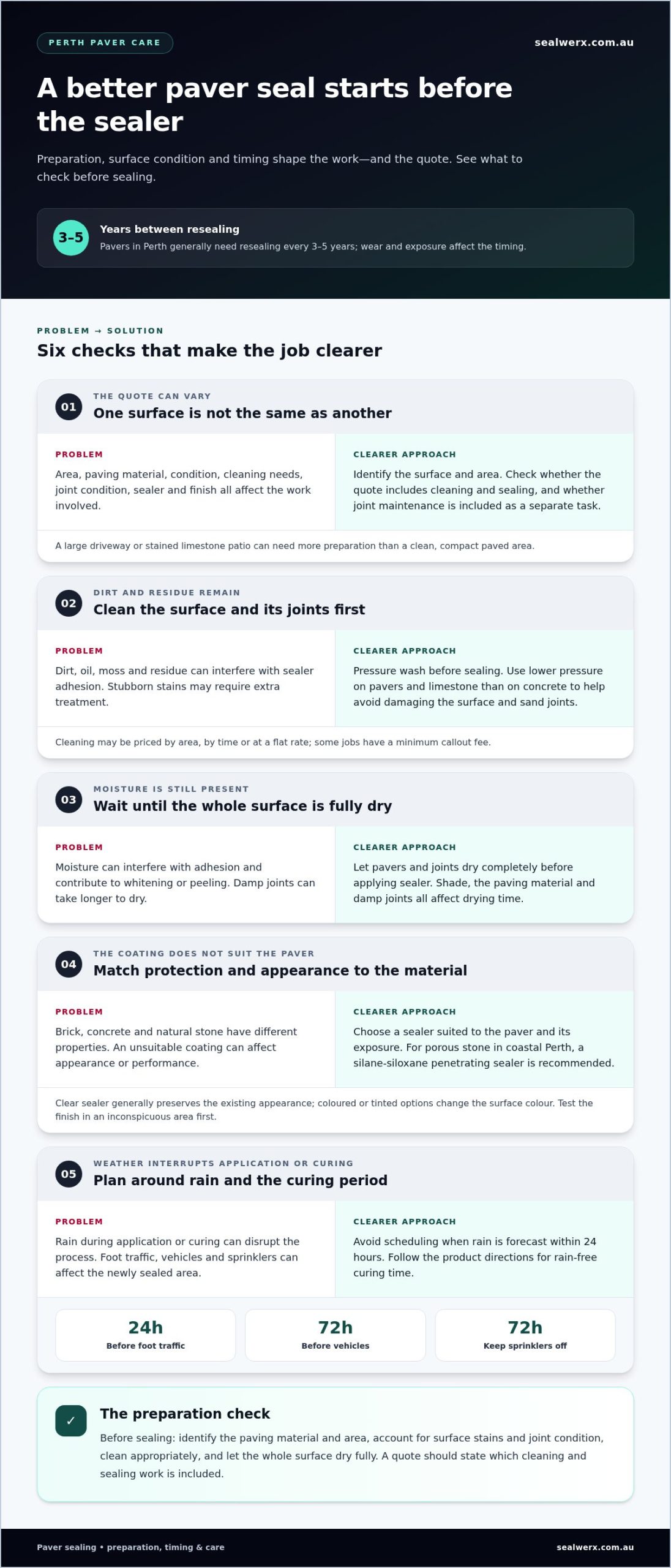
Several factors affect paver sealing prices in Perth: the area, paving material, surface condition, cleaning required and joint condition. A large driveway or stained limestone patio needs more preparation than a clean, compact paved area. The type of sealer and finish also influence the work involved.Cleaning may be priced by area, by time or at a flat rate, and some jobs have a minimum callout fee. Larger surfaces and stain treatment can add to the work, so a flat rate may not cover every task. Cleaning a driveway, patio or paved pool surround can involve different requirements. Joint maintenance and sealing are distinct tasks, so check that the quote clearly states which work is included.According to the Australian Bureau of Statistics, separate houses make up 77.8% of Perth dwellings. The Australian Bureau of Statistics also reports that 45.7% of dwellings in Perth have four or more bedrooms. In Perth, 41.9% of households are paying off a mortgage, according to the Australian Bureau of Statistics. These figures provide local context for homeowners budgeting to maintain paved outdoor areas.Before sealing, pavers need pressure washing to remove dirt, oil, moss and grime from their surfaces and joints. Pavers and limestone are washed at lower pressure than concrete, helping avoid damage to the surface and sand joints. Stubborn stains may require extra treatment, which affects preparation needs and the cleaning quote.Drying is just as important as cleaning. Pavers must be fully dry before sealer is applied, or moisture can interfere with adhesion. Shade, damp joints and the paving material all affect drying time. Let the prepared surface, including the joints, dry completely before sealing.The cost of sealing depends on the job and is provided in a quote. The area, material, surface condition and preparation required all shape the estimate. A useful quote identifies the paving surface and area, and states whether cleaning and sealing are included.Is it required to clean pavers before sealing them?
Yes. Cleaning removes dirt, oil, moss and residue that can interfere with sealer adhesion, and pavers must be fully dry before application. Moisture or contamination left on the surface can contribute to whitening or peeling. A glossy coating may also become slippery when wet. The result depends on suitable preparation and a sealer matched to the paving material.Clear sealer generally preserves the pavers’ existing appearance, while coloured or tinted options change the surface colour. Test the intended finish in an inconspicuous area first, as the result depends on the paver’s material and condition. If an old coating is peeling or uneven, it may need to be removed before applying another layer.Choose protection for the surface, not just the appearance. Brick, concrete and natural stone have different properties, so the suitable sealer varies by material. For porous stone in coastal Perth, a silane-siloxane penetrating sealer is recommended. A breathable penetrating sealer helps avoid trapping moisture beneath the surface, which can cause discolouration. Solvent-based acrylic sealers are another option, but suitability and finish depend on the pavers and product.Perth weather affects timing. Avoid scheduling application when rain is forecast within 24 hours, and follow the sealer’s product directions for rain-free curing time. After sealing, allow at least 24 hours before foot traffic and 72 hours before vehicles use the surface. Keep sprinklers off the area for 72 hours, too.The price depends on the paving material, area, condition, coating choice and preparation, including any removal work. A quote for your specific surface gives the exact figure. For natural stone pavers, stone sealing can help protect the finish while respecting the material’s needs.Protection from stains, oil, moisture, mould and weeds
A suitable sealer can slow how quickly contaminants enter porous pavers. That matters outdoors, where cooking, parking and foot traffic leave different marks. Oil on a concrete driveway, grease beside an outdoor barbecue and spilled drinks on a patio each need prompt attention. Sealing can make some spills easier to clean, but it does not make pavers stain-proof. Wipe spills promptly, before they settle into the surface.Natural stone, concrete and exposed aggregate absorb moisture differently, so protection should suit the material. A water-permeable sealer can help protect porous stone from faster degradation. A breathable penetrating sealer also helps prevent moisture becoming trapped beneath the surface and causing discolouration. An unsuitable coating can affect appearance or performance, so match the sealer to the paver and its exposure.Mould and algae thrive where outdoor surfaces stay damp or receive little sun. On shaded paths or beside garden beds, growth can make pavers look dirty and affect traction. Pressure cleaning removes surface grime, but established growth may need a separate mould-inhibitor treatment. Keep drainage clear and reduce persistent pooling to limit conditions that encourage regrowth.Bore water can leave orange or brown iron stains on paving, particularly near sprinklers. Treat existing marks before sealing, because a coating can make them harder to remove. Identify the water source and affected material first, as limestone and concrete may respond differently to stain treatment. Sealing can help reduce future absorption, but it will not remove iron deposits already embedded in the surface.Paver joints need attention too. Sealing the joints helps close spaces where weed seeds and moisture can settle, reducing opportunities for growth. It will not eliminate weeds that are already rooted or prevent every seed from arriving. Remove existing growth and address the joint condition before sealing. For routine care, use washing methods suited to the paver, clear debris from the joints and check for new weeds.Reasons to seal pavers in Perth
Sealing is a form of asset protection, particularly for paving exposed to Perth’s strong sun. Perth averages more than 3,200 sunshine hours per year. Ultraviolet exposure can leave limestone and concrete pavers looking chalky grey within 5-7 years of installation. A suitable sealer helps protect the surface from UV-related fading and everyday staining, while preserving its finish.Protection matters beyond appearance. Oil on a driveway, food near an outdoor barbecue and leaf marks on a patio can penetrate porous paving. A sealer helps limit absorption, giving spills less opportunity to become embedded stains. It does not remove existing marks, so clean the surface and treat stains before applying a coating.Sealed joints can help reduce weed growth by closing spaces where seeds and moisture settle. This can be useful on paths and patios where windblown seeds collect between pavers. Sealing does not replace routine care: remove established weeds and clear debris from joints after treatment.Resealing intervals depend on location and exposure. Pavers in Perth generally need resealing every 3-5 years. In most Perth Metro areas, the suggested interval is 2-3 years, while coastal suburbs may need resealing every 1-2 years because salt air degrades sealers faster. Check for worn or faded areas and consider how much foot traffic and weather the paving receives.When comparing the cost of sealing pavers in Perth, look for quotes that specify the material, area, preparation and sealing work. Concrete pavers and exposed aggregate have different surface characteristics, so the paving type and condition affect the work required. Treat sealing as planned maintenance: timely protection can help reduce the impact of sun, salt air and stains on a patio or driveway.Sealwerx: Natural Stone Polishing
Sealwerx provides natural stone restoration, including polishing, honing and stone sealing. If your natural stone pavers look dull, show etching or need protection after cleaning, these services can address their condition and sealing needs. The right approach depends on the stone’s finish: polishing restores a polished appearance, while honing creates a honed finish. Tile & Grout cleaning can also refresh adjacent tiled areas indoors or outdoors.For natural stone paving, consider professional care when stains remain after washing, the finish looks uneven, or you’re planning to reseal. A surface assessment helps determine the suitable restoration and protection work for the material. Contact Sealwerx to discuss your natural stone paving.Plan your next paving maintenance step
Let the condition of your paving guide the next step. Persistent staining, uneven wear or a tired finish may need attention beyond routine washing. For natural stone, the material and existing finish help determine the appropriate care. Identifying what the surface needs can help you plan maintenance around the result you want, rather than applying a coating without considering its condition.The cost of sealing pavers in Perth depends on the surface, its condition and the preparation required. A quote for your specific paving can clarify the work involved and help you make an informed decision. If you’re ready to discuss your outdoor surface, get in touch with Sealwerx about your paving. A considered maintenance plan can help you protect the finish and keep your space ready for everyday use.Frequently Asked Questions
How Often Do Pavers Need Resealing in Perth?
Most Perth pavers generally need resealing every 3-5 years, with exposure and traffic affecting the interval. Coastal pavers can require attention sooner because salt air wears sealer more quickly. Check high-use areas, such as driveway wheel paths, for fading or uneven wear. A simple water check can offer a rough indication: if water absorbs rather than beads, the sealer may need attention.Will Sealing Change the Look of My Pavers?
It can, depending on the sealer finish. A clear option is intended to preserve the existing appearance, while coloured or tinted sealers change the pavers’ colour. Before choosing, compare the finish with surrounding paving in daylight, including shaded areas. This is especially useful for a patio where a noticeable colour change could affect how the paving looks beside the home.How much does it cost to seal pavers?
The cost of sealing pavers in Perth depends on the area, paver material, surface condition and preparation required. Existing coatings, stains or worn joints can change the work involved. The exact price is provided in a quote for your paving. For an easy comparison, make sure the quote identifies the surface and explains whether preparation and sealing are included.Timeline and When Can You Drive On It?
Allow at least 24 hours before foot traffic and 72 hours before driving on newly sealed pavers. Keep sprinklers off the surface for 72 hours as well. Rain-free curing time varies by sealer, so follow the product directions and plan around the forecast. For example, avoid arranging vehicle access before the full waiting period has passed.Types of Paver Sealer, Which One Suits Your Pavers?
The right sealer depends on the paving material, exposure and finish you want. Clear, coloured and tinted options affect appearance, while penetrating and topical products treat surfaces differently. For porous natural stone in coastal Perth, a silane-siloxane penetrating sealer is recommended. Match the product to the paver rather than choosing by appearance alone, especially where stone and concrete meet.What Is the Average Cost to Seal Pavers in Perth per Square Metre?
There is no single per-square-metre price for every Perth paving job. The surface material, area, condition and cleaning or other preparation all affect the quote. A compact patio with sound pavers differs from a larger driveway with stains or worn joints. Ask for a quote that identifies the area and work included, so you can understand what the estimate covers.