
The strongest treatment isn’t automatically the right one. For concrete dust proofing in Perth, the right approach depends on the floor’s condition, the source of the dust and any treatments already on the surface. Dust proofing can bind loose particles and reduce dust from untreated concrete, but it won’t remove every source of airborne dust in a building.If dust keeps settling on your floors, it’s worth addressing the cause rather than simply covering the surface. The concrete’s strength, contamination, wear and intended use all help determine whether it needs a lighter surface treatment or more extensive work.This guide explains how cleaning and preparation affect the result, what to consider when dust raises air quality concerns, and why previous coatings or sealers matter. You’ll also learn what a clear project scope should cover and how concrete honing and sealing can form part of a considered floor-maintenance plan.
Key Takeaways
Match cleaning methods to the floor’s dust-proofing system to help maintain the treated surface.
Separate dust shed by concrete from particles brought in by vehicles, stock or other work.
Assess surface strength, contamination, wear and previous treatments before choosing a dust-proofing approach.
Define preparation, repairs, edges and the finished system clearly when planning the work.
Table of Contents
Concrete maintenance and cleaning
Air quality and dust contamination
Assessing the concrete surface and previous treatments
Which concrete dust-proofing products are best for garages, warehouses and homes?
Sealwerx: Natural Stone Polishing
Concrete maintenance and cleaning
Dust proofing can be a standalone treatment or part of a full concrete polish. Cleaning after treatment must suit the installed system, so maintenance starts with knowing what was applied.Dust Proofing Compared with Sealing and Polishing
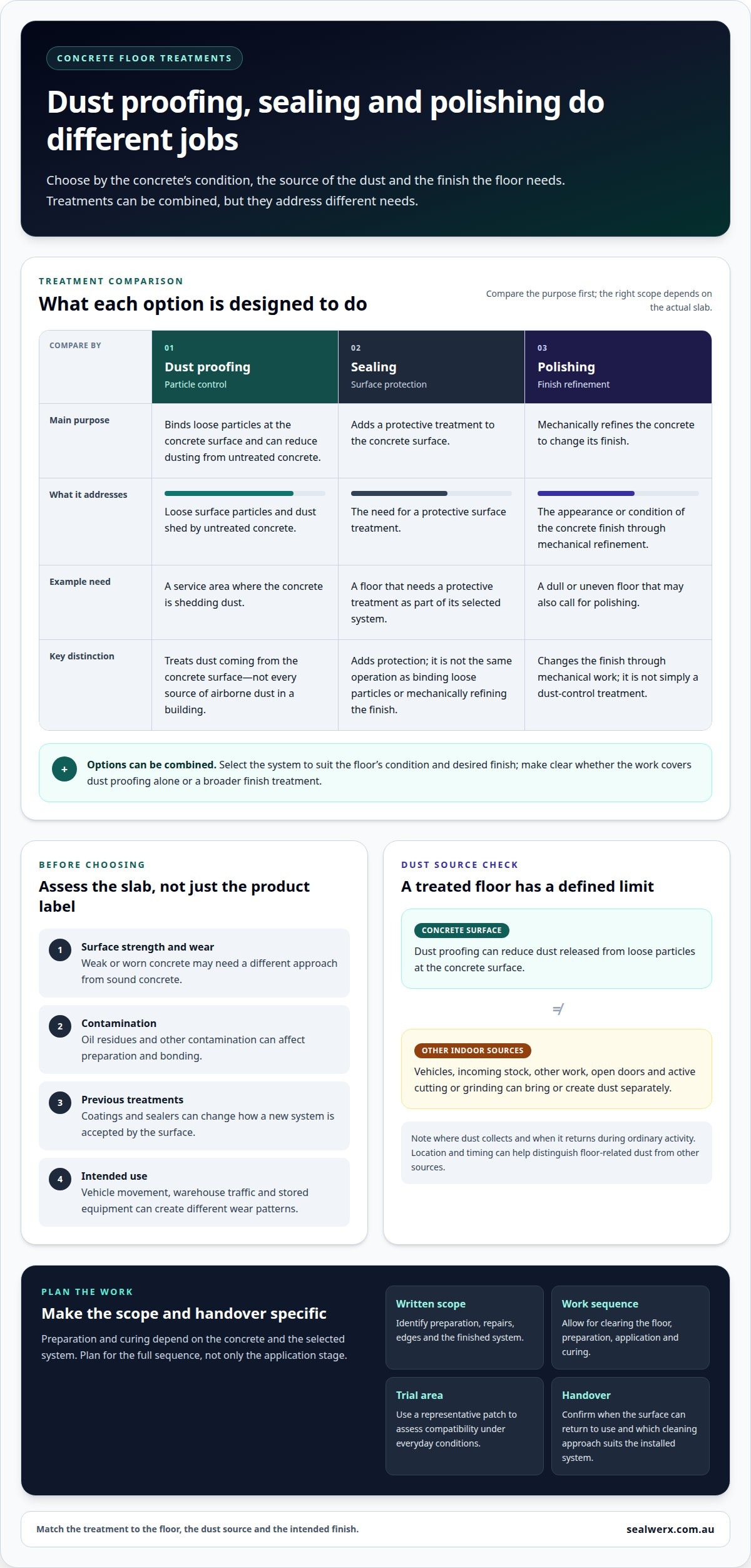
Dust proofing targets loose particles at the concrete surface. It can bind those particles and reduce dusting from untreated concrete. Sealing adds a protective treatment, while polishing changes the concrete’s finish through mechanical refinement. These approaches can be combined, but they address different needs.Choose according to the floor’s condition and the finish you want. For example, a service area that sheds dust may need particle control, while a dull or uneven floor may also call for polishing. A written scope should identify preparation, repairs, edges and the selected system. This clarifies whether the work covers dust proofing alone or a broader finish treatment.For ongoing care, use cleaning methods compatible with the installed system. A routine suitable for one treatment may not suit another, so identify the treatment before choosing products or methods. Remove loose debris first, then clean according to the system’s requirements.Application and Curing Time
Application and curing time depend on the preparation required and the selected system. A floor that needs cleaning, repairs or additional preparation involves different steps from a surface ready for treatment. The treatment also determines how it is applied and how long it needs before use.Plan around the full sequence, not just the application stage. A project may involve clearing the floor, preparing the concrete, applying the treatment and allowing it to cure. Have the expected work stages and access timing set out in the written scope. This helps households and workplaces plan around vehicles, stored goods or foot traffic.After application, follow the system’s curing and cleaning instructions. Incompatible cleaning methods can undermine care of the treated floor. A clear handover should explain when the surface can return to service and which cleaning approach suits it.Air quality and dust contamination
As untreated concrete wears, fine dust can settle on shelves, equipment and stored goods. For concrete dust proofing in Perth, first identify whether the slab is contributing to the dust. A suitable treatment can bind loose particles and reduce dust released from the concrete surface. This can make routine cleaning more manageable where dust repeatedly gathers near worn or heavily used areas.The treatment has a defined limit: it addresses dust from the concrete surface, not every particle indoors. Dust carried in by vehicles, stock or other work has a different source. For example, dust near a loading area may come from incoming goods, tyre movement or the slab itself. Noting where and when dust appears helps distinguish between these causes.Concrete dust proofing in Perth treats a floor surface; it does not control dust created by active building work. During tasks such as cutting or grinding, manage work-generated dust separately through applicable site procedures. A treated floor is not a substitute for those controls.A key limitation is the treatment’s scope. It may reduce surface dusting, but it won’t eliminate every source of airborne dust in a building. Nor will it stop particles entering through open doors or arriving with stock. If dust continues, compare its location and timing with vehicle movements, deliveries and nearby work. This can help show whether the floor remains a source.Assess the situation before selecting a treatment. Note where dust collects and whether the concrete looks powdery or worn. Clean the area, then observe where dust returns during ordinary activity. Record examples, such as dust appearing beside a traffic route or beneath stored materials. These observations help a concrete dust-proofing assessment in Perth distinguish floor-related dust from other sources and define a clear treatment scope.Assessing the concrete surface and previous treatments
A suitable dust-proofing approach starts with the floor itself, not a product label. Assess the existing surface, its strength, contamination, previous treatments and intended use. A garage with tyre marks and oil residues presents different conditions from a lightly used room. These details influence preparation and whether a proposed treatment can bond with the concrete.Previous coatings, sealers or other treatments can affect the next application. They may change how the surface accepts a new system, so identify what was applied and where it remains. Look for peeling, uneven sheen, residue and patches that behave differently during cleaning. These visible clues help map the floor’s condition before preparation begins.Surface strength matters too. Weak or worn concrete may need a different approach from sound concrete, while contamination can interfere with treatment. An assessment should review both conditions and consider the floor’s actual use. Warehouse traffic, stored equipment and regular vehicle movement can create different wear patterns across one slab.The treatment should match the dust issue. Some floors may need a full densify-and-seal treatment; others may suit a lighter surface treatment. A representative trial area helps assess compatibility before treating the wider floor. Choose a patch that reflects everyday traffic, contamination and wear, rather than a sheltered corner that sees little use. Observe how the trial performs under those real conditions.Before work begins, use the assessment to define preparation and repairs in the written scope. Include edges and the selected system, so the proposed work covers the whole floor, not just its open centre. For example, a traffic-worn route and dusty perimeter may need different preparation. Clear details also make proposals easier to compare fairly, with the same floor area, preparation and finished system.This careful review helps protect the floor by matching treatment to the concrete’s condition and daily demands. If the desired finish also involves refining the surface, concrete honing or polishing may be considered alongside dust control. The key decision is whether the floor needs particle control alone or broader surface restoration.Which concrete dust-proofing products are best for garages, warehouses and homes?
No single product suits every concrete floor. Choose a system according to the dust issue, surface condition and daily use. A home living area, a garage with vehicle traffic and a warehouse with regular stock movement place different demands on the floor. Match the treatment to the slab, rather than choosing by setting alone.At home, consider where dust appears and how the room is used. A spare room with occasional foot traffic may need a different level of treatment from a busy entry or workshop. If the floor also needs a refined appearance, a fuller system may suit better than dust control alone. Let the intended finish and ongoing cleaning routine guide your choice.For a garage, account for vehicle movement, stored items and any surface contamination. These conditions can affect preparation and the treatment’s compatibility with the concrete. In a warehouse, consider traffic routes, equipment movement and areas where stock is handled. A representative trial area should reflect normal use, rather than a protected patch that sees little wear.Compare proposed systems by what they include, not just the product description. The scope should define preparation, repairs, edges and the finished system. Proposals are easier to assess when they cover the same floor area and preparation. Establish the system’s maintenance requirements too, since cleaning methods need to suit the treatment. This helps maintain a consistent finish across homes, garages and commercial floors.A useful selection process is straightforward:
Identify where concrete dust appears and how the space is used.
Consider traffic, contamination and the desired floor appearance.
Compare preparation and finished-system details across proposals.
Choose a compatible cleaning routine for the installed treatment.
For a floor that needs more than dust control, explore tailored concrete floor treatments suited to its condition and use.Sealwerx: Natural Stone Polishing
Sealwerx helps Perth property owners care for concrete alongside natural stone and tiled surfaces. If dust proofing has addressed the concrete but nearby marble, limestone or tiled areas look dull, Natural Stone Polishing or Natural Stone Honing can restore their finish. Stone Sealing helps protect natural stone, while Tile & Grout Cleaning targets built-up soil on tiled surfaces.These services address different surface needs from concrete dust control. For example, a tiled entry beside a concrete floor may need grout cleaning, while worn natural stone may benefit from honing or polishing. Matching the method to the material helps protect its finish and maintain the property.For help with natural stone or tiled surfaces, contact Sealwerx or visit sealwerx.com.au.Plan the next step for your concrete floor
A useful next step is to gather details that will shape a practical flooring plan. Note where dust appears, how the space is used and whether you know of earlier coatings or treatments. Photos of worn areas and records of previous work can make a conversation about the floor more specific.For concrete dust proofing in Perth, focus on the result you need from the surface, not just the treatment name. A home garage, commercial work area and living space each have different demands. Clear priorities connect the floor’s present condition with its intended use and maintenance.Sealwerx can discuss concrete floor care and related surface restoration, including Natural Stone Polishing, Natural Stone Honing and Stone Sealing. To talk through your floor and possible next steps, contact Sealwerx about concrete dust proofing. A considered plan can help you maintain your property with confidence.Frequently Asked Questions
What concrete dust-proofing services are available in Perth?
Perth property owners can consider Concrete Honing, Concrete Polishing and Concrete Sealing for different floor needs. Honing or polishing addresses the surface finish, while sealing adds a protective treatment. For example, a garage floor needing both a refined appearance and surface protection may require a different scope from a utility area focused on maintenance. The right combination depends on the concrete and its intended use.What is concrete dust proofing and how does it work?
Concrete dust proofing treats the floor to bind loose surface particles and reduce dust shed by untreated concrete. It focuses on the slab itself, rather than dust carried inside on stock or vehicles. If powder returns after cleaning in a particular area, for instance, the surface may be contributing. Dust proofing addresses that source, but does not control every particle in the building.What preparation is required before applying a concrete dust-proofing treatment?
Preparation starts by clearing the work area and identifying anything that could affect the floor treatment, such as residue, worn patches or an existing coating. Where practical, move stored goods and vehicles away from the slab, and note areas needing attention. Share details of past treatments and the floor’s usual use. This helps define cleaning, preparation and any repairs before application.How long does a concrete dust-proofing treatment last, and how is it maintained?
Service life depends on the treatment, floor condition, traffic and ongoing care, so it varies between a quiet room and a frequently used warehouse route. Maintain the surface with cleaning methods suited to its installed system. Track where wear returns, such as along a vehicle path or doorway, and clean consistently. These observations help guide future floor maintenance.