
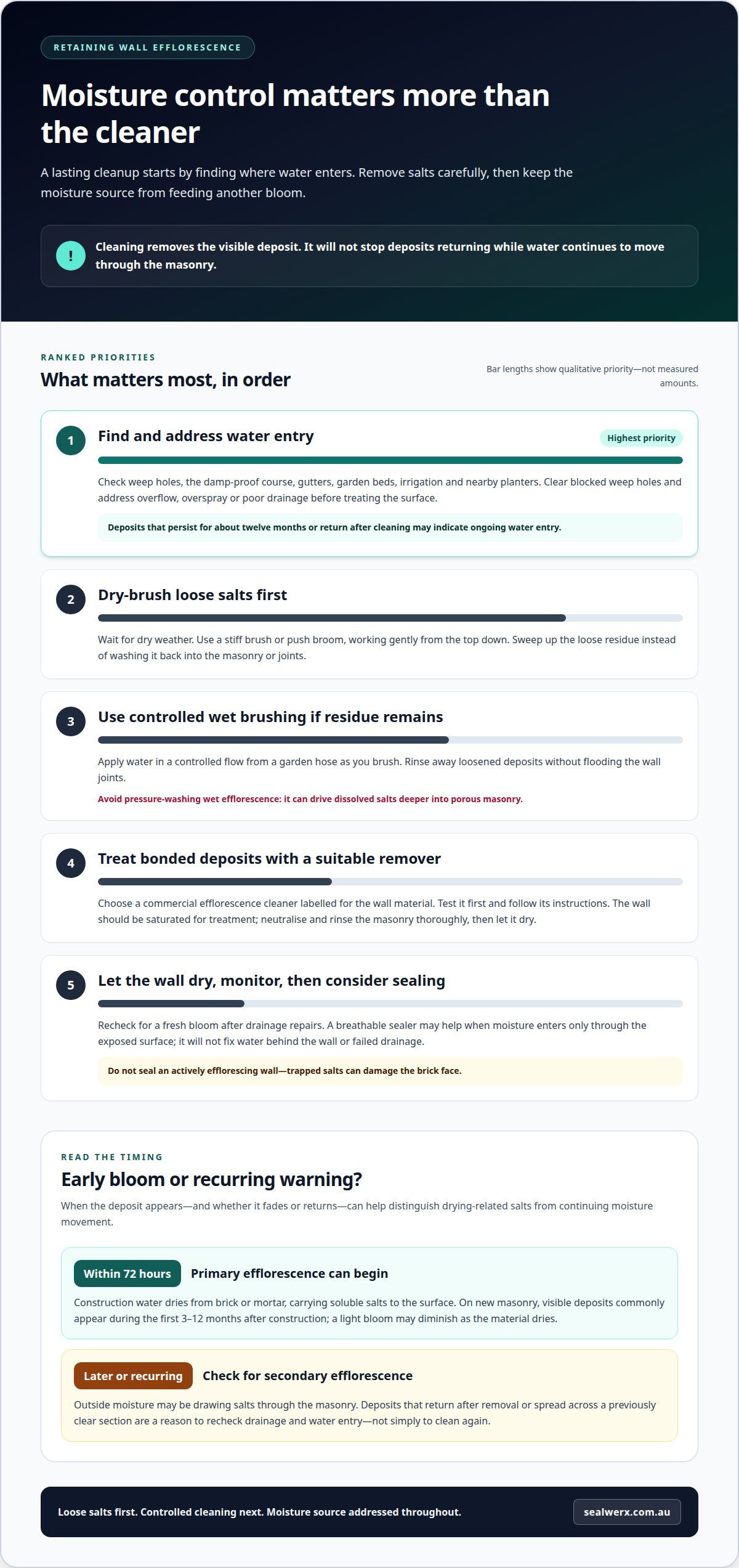
The right cleaner matters, but moisture control matters more. The practical answer to how to clean efflorescence off a retaining wall is to dry-brush loose salts first, then treat bonded deposits with a suitable commercial efflorescence remover on a saturated wall. Neutralise and rinse the masonry thoroughly, let it dry, and address ongoing water entry before considering a breathable sealer.That white crust is usually soluble salts carried to the surface by water. If it appears soon after construction, it may be primary efflorescence as construction moisture dries. If it appears later or returns after cleaning, outside moisture may still be moving through the wall. Cleaning removes the visible deposit, but won’t prevent another bloom if the moisture source remains.This guide explains what causes efflorescence, how primary and secondary types differ, and how to choose and use a commercial cleaner carefully. It also covers what recurring deposits may indicate and when cleaning alone won’t address the underlying problem.
Key Takeaways
Trace recurring white deposits to moisture movement and soluble salts, rather than treating the surface mark as the whole problem.
Start with dry brushing on dry masonry to lift loose salts without washing them back into the wall.
Distinguish early construction-related deposits from later blooms that can point to continuing water entry.
For bonded residue, use a suitable commercial cleaner carefully, then neutralise and rinse the surface before it dries.
Table of Contents
What Causes Efflorescence?
What Is Efflorescence on Pavers and Other Materials Indicative Of?
Primary and secondary efflorescence
Using a commercial efflorescence cleaner
Sealwerx: Natural Stone Polishing
What Causes Efflorescence?
Efflorescence forms when moisture moves through porous masonry and carries soluble salts to the surface. As the water evaporates, the salts remain as pale crusts or stains on retaining wall blocks.
Identify Moisture Sources
Inspect the wall and the ground behind it for signs of continuing water movement. Knowing how to clean efflorescence off retaining wall surfaces starts with identifying where moisture enters. Look for deposits that return after cleaning, damp patches, and water stains near joints. Check weep holes, the damp-proof course, gutters, garden beds, irrigation, and nearby planters. Blocked weep holes, overflowing gutters, or poor planter drainage can direct water towards masonry. Deposits that persist for about twelve months or return after cleaning may indicate ongoing water entry.
Address Moisture and Drainage Problems
Address the water source before treating visible salts. Clear blocked weep holes and deal with gutter overflow, irrigation overspray, or drainage from planters and balconies. Check whether garden beds sit high against the wall or water collects nearby. Persistent moisture can deteriorate mortar, attack brick faces, and cause spalling. Removing deposits alone won’t prevent another bloom while water continues to move through the masonry.
After addressing the source, let the wall dry and stabilise. A breathable sealer may help if moisture enters only through the exposed surface, but it won’t resolve water behind the wall or failed drainage. Don’t seal an actively efflorescing wall: trapped salts can damage the brick face. Consider the masonry material and moisture pathway before choosing a surface treatment.
A sound plan for cleaning efflorescence off retaining wall blocks includes monitoring the wall after drainage repairs. If another bloom appears, recheck weep holes, gutters, irrigation, garden beds, and planter drainage. Later deposits can signal continuing water entry, not just a cleaning problem. Persistent moisture moves salts through masonry and can weaken mortar, so addressing the source is part of maintaining the wall.
What Is Efflorescence on Pavers and Other Materials Indicative Of?
Efflorescence on pavers or concrete masonry indicates that water has carried soluble salts to the surface. Remove loose deposits while dry, then try wet brushing if residue remains.For concrete or masonry retaining walls, begin with a dry brush and use a garden hose if deposits remain. Avoid pressure-washing wet efflorescence: it can drive dissolved salts deeper into the masonry and encourage another bloom.
Wait for dry weather, then brush retaining wall blocks with a stiff brush or push broom. Sweep away loose deposits before adding water, as wetting can dissolve salts back into the masonry. Brush gently from the top down, and collect the residue rather than rinsing it into joints or nearby pavers.
Assess the result before wetting the surface. A light, early bloom on pavers or masonry may come off with dry brushing alone. If a white film remains, don’t scrub harder. Note where it persists and whether it follows joints, edges, or a broad face. These patterns can help distinguish a surface deposit from residue bonded to the material.
For persistent white deposits, wet-brush the masonry using a garden hose and a stiff brush. Apply water in a controlled flow as you brush, rather than directing a forceful jet at the blocks. This can help remove persistent deposits, including calcium carbonate and calcium hydroxide. Rinse away the loosened residue without flooding the wall joints.
Let the blocks dry, then check for remaining deposits or a fresh bloom. Don’t pressure-wash wet efflorescence: the force can push dissolved salts further into porous concrete or masonry. If residue remains firmly bonded after brushing, use a suitable efflorescence cleaner rather than stronger pressure or aggressive scrubbing.
Primary and secondary efflorescence
Compare the deposit’s timing with the age of the masonry. Primary efflorescence usually appears within the first 72 hours after a building material is used, as construction water dries from brick or mortar. On new masonry, visible deposits commonly appear during the first 3-12 months after construction. Retaining wall blocks and pavers may show a bloom within days or weeks of installation.
Watch whether the deposit fades as the structure dries. Primary efflorescence usually diminishes over time, so a light, temporary bloom on new concrete can be part of its early drying process. Note where it appears and whether the area changes. A deposit that gradually lessens differs from one that keeps returning after cleaning.
Treat a later or recurring bloom as a different signal. Secondary efflorescence occurs when outside moisture draws salts out of building material. If deposits appear well after construction, return after removal, or spread across a previously clear section, water may still be entering the masonry. This is different from the normal drying process of newly laid blocks.
Use timing and recurrence to guide your inspection. Note when the wall was installed, when the first bloom appeared, and whether it diminished or returned. For example, a brief deposit on new pavers differs from repeated white marks on an older retaining wall. The latter pattern warrants checking for continuing moisture, because cleaning the visible salts alone won’t explain why they reappear.
Using a commercial efflorescence cleaner
For bonded deposits, choose a proprietary efflorescence remover labelled for the wall material. Test it first, then follow the instructions for application, neutralising, and rinsing.
Choose a Suitable Commercial Cleaner
To decide how to clean efflorescence off a retaining wall, match the cleaner’s label to the surface, such as concrete, brick, or stone. Test an inconspicuous area first to check for damage or colour change. A proprietary remover can treat bonded deposits. Correctly diluted mild acid is another option on a saturated wall, but avoid strong acids, including muriatic acid, which can be dangerous.
Prepare Protective Equipment and Precautions
Read the product label and prepare the specified protective equipment before opening the cleaner. Keep the product away from skin and eyes, and take care to prevent splashes on nearby surfaces. Don’t use muriatic acid casually: it presents a danger during efflorescence removal. Keep the cleaner in its original container while preparing the treatment.
Apply the cleaner to saturated masonry as directed. How to clean efflorescence off a retaining wall depends on the surface material and the product instructions. Follow the stated dilution and application method rather than guessing or increasing the strength. Treat a manageable area at a time to keep application and rinsing controlled. Stop if a test patch changes the material’s colour or finish.
Neutralise any residual acid and rinse the masonry thoroughly with clean water. Remaining acid can leave salts and trigger a fresh bloom. Let the surface dry completely before resealing or repairing grout. Don’t seal an actively efflorescing wall, as trapped salts can damage its face.
If bonded deposits resist careful cleaning, arrange professional efflorescence treatment for a suitable approach to the masonry.
Sealwerx: Natural Stone Polishing
Sealwerx provides Natural Stone Polishing for stone surfaces that need restoration after appropriate cleaning and moisture repairs. If efflorescence has affected natural stone paving or nearby stone finishes, Natural Stone Polishing or Natural Stone Honing can help restore the surface. Stone Sealing can protect suitable stone once it has dried and stabilised. For tiled areas, Tile & Grout cleaning addresses soil and residue on tiles and grout.Sealing doesn’t replace fixing ongoing water entry, and an actively efflorescing surface shouldn’t be sealed. Address the moisture source first, then choose restoration suited to the material and its condition.Contact Sealwerx to discuss restoring affected stone or tiled surfaces.Plan the Next Step for Your Wall
When deciding how to clean efflorescence off a retaining wall, let the material’s condition guide your next step. If deposits keep appearing after cleaning, the problem needs attention beyond appearance. Consider the finish the wall requires, and avoid applying a coating while moisture remains active. A measured approach helps protect the masonry instead of simply covering visible marks.For nearby natural stone that needs restoration, Sealwerx offers Natural Stone Polishing, Natural Stone Honing, and Stone Sealing. These services address the stone surface, while recurring efflorescence requires attention to its moisture source. Choose work suited to the affected material and its condition.Contact Sealwerx for efflorescence help and discuss a practical next step for your surfaces. With the right treatment and ongoing attention to the wall, you can move forward with a clearer plan for maintaining your property.Frequently Asked Questions
Can I just scrub it off with vinegar?
Vinegar may improve a small, light patch, but it’s unreliable for cleaning an entire wall. Uneven application or inadequate rinsing can leave patchy results and acetate salts on masonry. For bonded deposits, use a cleaner labelled for the wall material and test it in an inconspicuous spot first. Vinegar won’t fix recurring moisture.Can efflorescence be completely prevented?
No method can guarantee that efflorescence will never form. Careful material selection and sound design and construction practices can help reduce the risk. For an existing wall, prevent water from collecting against the masonry and keep drainage paths clear. These steps address common conditions that carry salts to the surface, though they can’t remove every possible cause.Does efflorescence damage brickwork?
Surface salts are a sign to investigate, while persistent moisture movement can harm the masonry. Over time, it can deteriorate mortar, attack the brick face with salts, and cause spalling, where the face flakes or breaks away. Look for crumbling joints or damaged brick faces alongside recurring white deposits: these point to more than a cosmetic issue.Does sealing effectively halt efflorescence?
Sealing can help limit efflorescence if water is penetrating only through the exposed surface. It won’t fix moisture entering from behind the wall or through faulty drainage. Choose a breathable, penetrating sealer suited to the masonry, and apply it only after addressing the moisture source and letting the wall dry. A coating over active salts can worsen damage.Not sure if it’s efflorescence?
Look for dry, pale, crystalline residue on the masonry surface. Efflorescence often brushes away as powder. Embedded stains, damp patches, or fuzzy growth look different and need closer assessment. Don’t apply acid or a strong cleaner to an unidentified mark. First test a small area with a dry brush and note how the surface responds.Should I seal the wall to stop it?
Don’t seal a wall while it’s actively producing efflorescence. Trapped salts can damage the brick face, and a surface coating won’t fix water entering behind the masonry. Address the source first, then let the wall dry and stabilise. If moisture is limited to surface penetration, a breathable sealer may help protect the masonry after cleaning.