
What if grout that looks dark or patchy needs cleaning, not sealing? Appearance alone can’t tell you whether protection has worn away, dirt has settled into the joints or the grout needs repair. If you’re wondering how to tell if grout needs sealing, look at how the grout behaves as well as how it looks.
It’s worth checking carefully, especially in a Perth bathroom or another tiled wet area where moisture and staining are concerns. A small water test can offer a clue, but tile and grout may absorb water differently. Cracks, missing grout and failing silicone also call for a different response than worn sealer.
This guide explains how to inspect grout and carry out a cautious water test without mistaking tile behaviour for grout behaviour. You’ll also learn when cleaning, sealing or regrouting is the more appropriate next step, so you can protect the tiled surface without expecting sealer to fix every problem.
Key Takeaways
- Identify the grout type first: cement-based grout may benefit from sealer, while epoxy grout generally doesn’t need the same treatment.
- Recurring stains, fading or uneven colour are reasons to inspect more closely, not proof that sealing alone will solve the problem.
- To assess how to tell if grout needs sealing, put a few drops of water on a small, clean, dry, inconspicuous area of grout and observe what happens.
- Match the response to the condition: clean surface dirt, consider sealing sound absorbent grout, and address cracks or persistent dampness before sealing.
- Use the same careful inspection process in Perth showers, kitchens and tiled living areas to choose the right grout-care step.
How to tell if grout needs sealing: start with the grout type
To work out how to tell if grout needs sealing, consider three things together: the grout material, its physical condition and how it responds to water. A water test can help, but it won’t give a reliable answer if the grout type isn’t suited to sealing or the joints are damaged.
Grout sealer can reduce absorption in suitable grout; grout repair restores damaged joints. Sealer may help limit moisture and staining, but it won’t mend cracks, replace missing grout or remove existing stains. Those problems need appropriate cleaning or repair before protection is considered.
Which grout types are commonly sealed?
Cement-based grout is generally porous and may benefit from a suitable sealer when it’s clean, sound and fully dry. Epoxy grout is typically less absorbent and often doesn’t need sealing. Grout composition and care instructions vary, so check the product or installation guidance if you’re unsure what’s in the joints. For background on common grout materials and uses, see What is Grout?
Why grout appearance alone is not enough
Colour changes can have several causes. Dirt can build up in busy areas, cleaning residue can leave a film, and grout may look different as it ages. A darker patch doesn’t automatically mean the sealer has worn away. Clean a small area first, then assess the grout once it’s dry.
Look beyond colour, too. Discolouration affects appearance, while cracks, missing sections or separation at an edge point to physical damage that sealing can’t correct. A change around a joint may also reflect movement, so don’t treat it as a surface-protection issue alone.
Tile and grout can react differently to moisture. Some tiles absorb water or darken temporarily while the grout beside them remains unchanged, or the reverse may happen. Water on the tile face therefore isn’t a dependable indicator of grout performance. In a Perth shower, assess the grout joint itself and its condition rather than drawing a conclusion from the surrounding tile. The next section explains how to check a small area carefully.
Seven visible signs your grout may need sealing
These signs can help you decide where to inspect more closely, but treat them as clues rather than a diagnosis. No single visual sign confirms that grout sealer has failed. Grout type, cleaning history and joint condition all affect what you’re seeing.
Signs that may point to worn protection
- Water darkens the grout quickly. If a grout joint darkens promptly after ordinary surface moisture, it may be absorbing water. Compare the grout itself, not the surrounding tile, and remember that this observation alone doesn’t confirm sealer failure.
- Spills leave marks easily. If liquid seems to penetrate the joint rather than sit on the surface, inspect the area once it’s clean and dry. The grout material also affects how it responds.
- Stains keep returning. Marks that return after appropriate cleaning may indicate that residue remains in the grout or that the surface is absorbent. Note where the stains appear and whether they recur in the same spots.
- Colour looks faded or patchy. Areas exposed to frequent traffic, moisture or cleaning may look different from less-used sections. Uneven protection is one possibility, but age and residue can also change the appearance.
Signs that may need more than sealing
- Grout is powdery or crumbling. Material that brushes away or breaks apart may be deteriorating, not simply unprotected. Sealer won’t restore its strength; damaged sections may need regrouting.
- There are cracks, gaps or missing sections. Open joints can allow water to reach areas the grout is meant to protect. Treat these as repair concerns, not as a prompt to seal over the damage.
- Dampness or mould persists. Ongoing damp patches or recurring mould call for attention to the moisture source. Sealer won’t resolve an underlying leak or moisture problem, and surface discolouration alone can’t establish what’s happening behind the tile.
For a technical reference to cement grout classifications and performance, the Tile Council of North America provides Tile Industry Standards for Grout. Use it as background alongside the grout product’s own guidance. If staining or damage is difficult to assess, professional tile and grout cleaning can help distinguish a cleaning issue from joints that need repair.
How to test grout with water without misreading the result
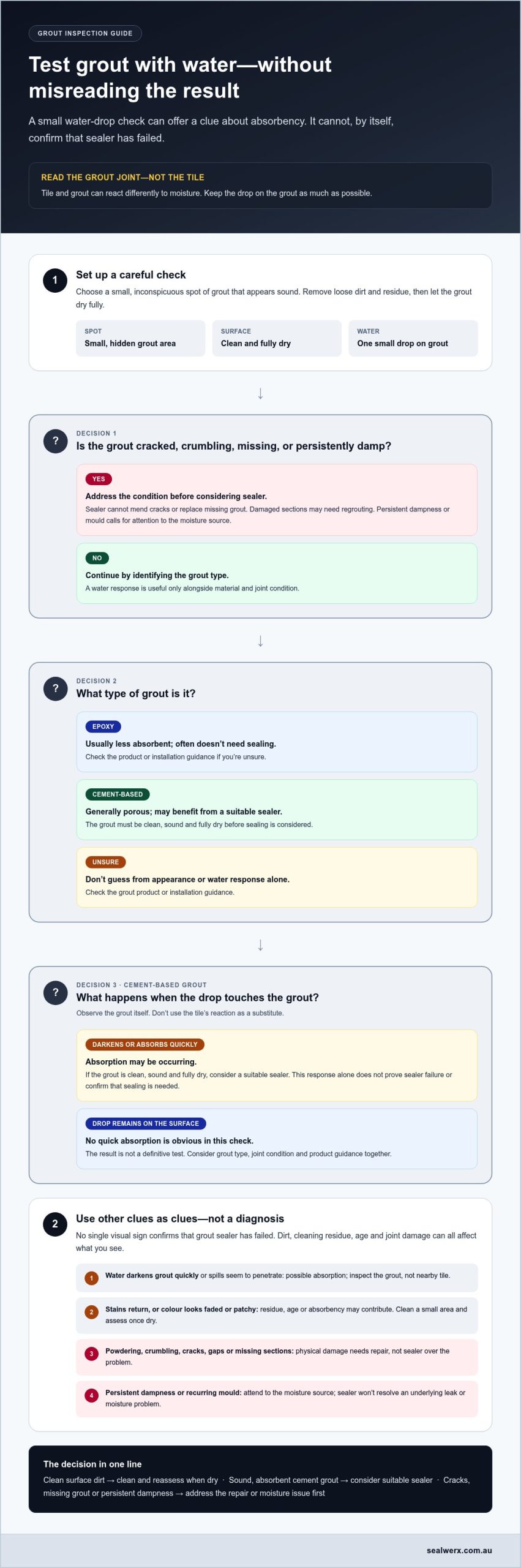
A small water-drop check can offer a clue about grout absorbency, but it isn’t a definitive test of whether sealer has failed. If you’re working out how to tell if grout needs sealing, consider the result alongside the grout type and the condition of the joint. A drop that disappears or darkens the grout may suggest absorption, but it doesn’t prove sealing is needed.
A careful water-drop check, step by step
- Choose a suitable spot. Select a small, inconspicuous section of grout that appears sound. Avoid cracked, crumbling or persistently damp areas, which need attention beyond a water test.
- Clean and dry the area. Remove loose dirt and surface residue using an appropriate cleaning method. Let the grout dry fully before testing, because damp grout can affect what you observe.
- Apply water to the grout only. Place a small drop directly on the grout joint, keeping it off the tile as much as possible.
- Watch the response. Notice whether the drop remains on the surface or the grout darkens as it absorbs moisture. If useful, compare it with another small, clean, dry section of grout.
- Stop after the check. Wipe away any remaining water and let the area dry. There’s no need to repeatedly soak the joint.
Interpret the result cautiously. A drop that stays beaded may suggest the surface is repelling water, while rapid darkening or absorption may indicate porosity. Neither result is a guarantee: grout material, existing coatings and surface condition all affect how water behaves.
Why the test can give a misleading result
Grout type and surface condition affect water-test results. Dirt or cleaning residue can change how water spreads, and an existing coating may make water bead even if the grout’s condition varies elsewhere. Worn, damaged or uneven joints may also respond inconsistently, so one spot can’t represent the whole tiled area.
Keep the drop on the grout. Some tiles are porous and may absorb water or darken, too, which can be mistaken for grout absorption. If water spreads over the tile, the test is harder to interpret. In a shower, avoid repeated testing or adding water to damaged joints. One careful check is more useful than soaking the area and drawing conclusions from an unclear result.
Use the water response as one piece of evidence, not a verdict. If the result is ambiguous, or the grout is cracked or persistently damp, pause before applying sealer and assess the underlying condition first.
Choose the right next step: clean, seal, or repair the grout
Use the grout’s condition, not the water test alone, to choose what to do next. Surface dirt calls for cleaning; sound grout that absorbs moisture may be suitable for sealing; damaged joints or persistent dampness need repair or closer assessment. Sealer protects suitable grout, but it can’t restore missing material or solve an underlying moisture issue.
| What you observe | Sensible next step |
|---|---|
| Grout is intact but looks dirty or has cleaning residue | Clean it appropriately, then reassess when fully dry. |
| Clean, sound grout absorbs moisture and its product guidance supports sealing | Prepare the surface and apply a suitable sealer according to its instructions. |
| Cracks, gaps, crumbling or missing grout | Assess the damage; regrouting may be more appropriate than sealing. |
| Dampness or mould keeps returning | Address the source of moisture before considering surface protection. |
When cleaning or sealing may be appropriate
If the joints are intact but visibly soiled, clean them rather than covering the grout with sealer. Residue and embedded dirt can affect appearance, and sealing over grime may trap it in the surface. Sealwerx provides professional tile and grout cleaning in Perth to address staining and buildup before you reassess the joints.
Sealing may suit grout that is sound, clean and absorbent, provided the grout and sealer product guidance recommend it. Preparation matters: the grout must be thoroughly cleaned and completely dry before application. Follow the product instructions for use and drying, and don’t treat sealer as a way to hide persistent discolouration.
When grout needs repair or closer assessment
Cracks, open joints, crumbling or missing sections are repair concerns. Regrouting may be needed to restore the joint before suitable protection is applied. Similarly, recurring dampness or mould should prompt attention to the moisture source. Sealing over a damaged or persistently wet area can mask the visible symptom without addressing the cause.
Sealwerx provides tile and grout cleaning and regrouting across metropolitan Perth. Arrange professional grout care to match the treatment to the condition of your tiled surface.
Protect tiled surfaces in Perth with the right grout-care plan
A sound grout-care plan follows a simple sequence: identify the grout type, inspect its condition, carry out a careful water check if appropriate, then choose the next step. This helps you avoid sealing grout that’s dirty, damaged or still damp. It also keeps protection in perspective: sealer can help protect suitable grout, but it isn’t a substitute for cleaning or repair.
In a Perth home, the right response may differ between a shower, a kitchen splash zone and a tiled living area. A shower floor has frequent contact with water, while kitchen grout may be marked by spills and everyday use. Check the joints in context rather than assuming one treatment suits every tiled surface.
What professional grout care can address
Match the treatment to what you find. Tile and grout cleaning can address suitable surface soil and buildup. If clean, sound grout has uneven colour, grout colour sealing can refresh its appearance while helping protect suitable grout. Cracked, crumbling or missing sections call for a different approach: regrouting can restore damaged joints, but it isn’t simply another way to seal them.
For suitable grout, preparation remains essential. Clean away soil and residue, then allow the joints to dry fully before applying sealer. Sealing over grime can trap it, while sealing damaged grout won’t restore missing material or correct the cause of recurring dampness.
A simple maintenance routine for tiled areas
Small habits support the longer-term condition of tiled surfaces:
- Wipe up spills promptly, particularly in kitchens where liquids can stain grout.
- Clean tiled surfaces routinely with products suited to the tile and grout, and avoid leaving cleaning residue in the joints.
- Check grout periodically for changes in colour, cracks, gaps or crumbling.
- Pay closer attention to showers and other frequently wet areas. If dampness keeps returning, look for the cause rather than covering the symptom with sealer.
If you’re still weighing up how to tell if grout needs sealing, use the overall condition as your guide: clean, sound grout may be suitable for protection, while dirty or damaged joints need a different response. Sealwerx provides surface restoration and protection in Perth, including tile and grout cleaning, grout colour sealing and regrouting. View Sealwerx grout services to choose the right support for your tiled surface.
Make the right call for your grout
Knowing how to tell if grout needs sealing takes more than appearance or a single water test. Check the grout type and condition, then treat water absorption as one clue. Clean, sound grout may be suitable for sealing, while surface dirt calls for cleaning and cracked, crumbling or missing grout may need regrouting.
This distinction helps protect tiled surfaces without expecting sealer to fix every problem. Whether you’re caring for a Perth shower, kitchen or tiled living area, choose the next step to suit what you’ve found.
Sealwerx is a Perth-based surface restoration team serving residential and commercial properties. Its grout services include cleaning, colour sealing and regrouting, matched to the condition of the tiled surface. Explore Sealwerx grout cleaning, colour sealing and repair services to get started.
A careful inspection is a practical first step towards maintaining a clean, durable tiled finish.
Frequently Asked Questions
How can I tell if grout needs sealing?
Check the grout type, condition and response to water together. Cement-based grout may benefit from sealer if it’s clean and intact, while epoxy grout often doesn’t need it. On a small, clean, fully dry area, place a drop of water on the grout itself. Quick absorption or darkening can suggest porosity, but it doesn’t prove the sealer has failed. Cracks, crumbling or persistent dampness indicate concerns beyond sealing.
Does grout need sealing if water beads on the surface?
Not necessarily. Beading suggests the tested surface is repelling water, perhaps because sealer is present, but it doesn’t confirm that every grout joint is protected. Check a small, clean, dry section of grout rather than the tile, which can behave differently. Existing coatings, dirt and uneven wear can also affect the result. Consider the grout’s material and overall condition before deciding whether more protection is appropriate.
How often should grout be sealed?
There isn’t one schedule for every tiled area. Cement-based grout is commonly resealed when it no longer repels water, often every one to three years depending on moisture exposure and traffic. Follow the sealer manufacturer’s directions and consider how the area is used. A Perth shower used daily may need closer monitoring than grout in a lightly used living area. Inspect periodically rather than relying on the calendar alone.
Can I seal grout that is already stained or mouldy?
Don’t seal over stains or mould. Clean suitable surface soil first, then let the grout dry completely before considering a sealer. Sealing dirty grout can trap residue, while sealer won’t remove existing stains. If mould or dampness keeps returning, address the moisture source rather than covering the symptom. Cracked or crumbling grout may need repair before any protective treatment is suitable.
Does epoxy grout need sealing?
Epoxy grout is generally less absorbent than cement-based grout and often doesn’t need sealing. Applying a product intended for porous cement grout may be unnecessary or unsuitable. Check the grout manufacturer’s care instructions, particularly if you’re unsure which material was installed. For either grout type, keep joints clean and inspect them for damage. Sealer won’t repair cracks, gaps or missing material.
Can I seal grout myself?
Yes, you can seal suitable grout yourself if the grout and sealer instructions support it. First clean the joints thoroughly and allow them to dry completely. Apply the product carefully to the grout, following its directions and protecting adjacent surfaces as instructed. Don’t use sealer to cover dirt, stains or damage. If the grout is crumbling, persistently damp or difficult to identify, assess its condition before starting.
What happens if I do not seal grout?
Unsealed cement-based grout may absorb moisture and staining more readily, particularly in wet or busy areas. That doesn’t mean every unsealed joint will fail; grout type, condition and use all matter. Regular cleaning and prompt spill removal help manage surface soil, while periodic checks can reveal changes early. In Perth kitchens and showers, inspect joints for recurring stains, cracks or dampness and choose care based on what you find.